
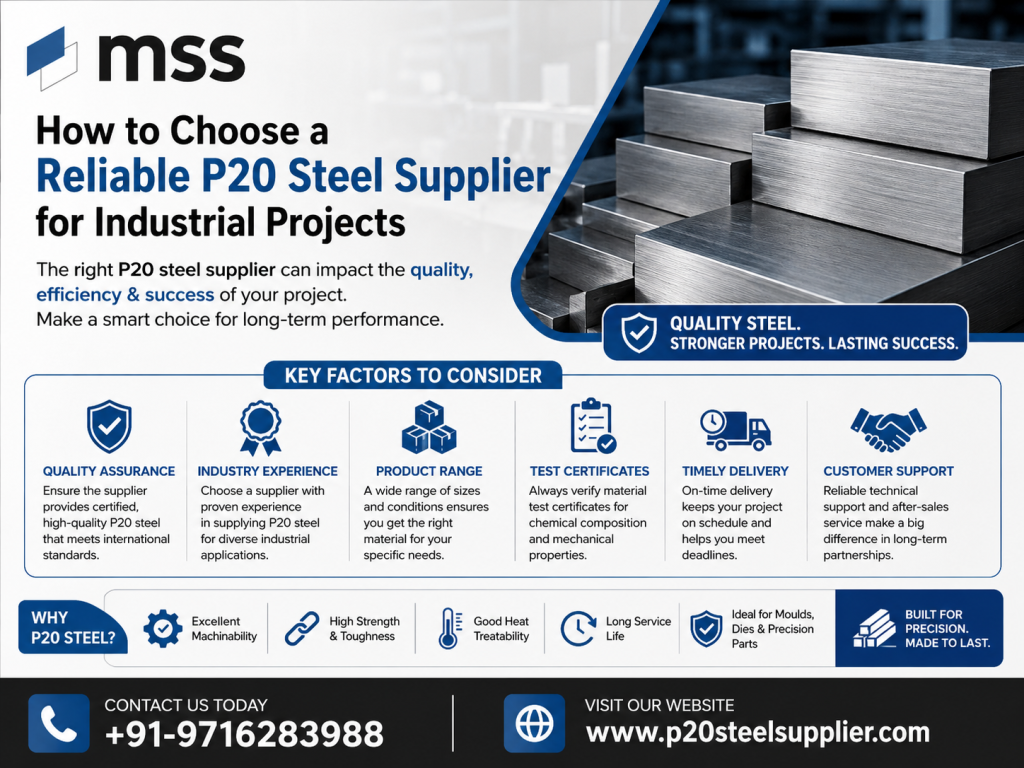
How to Choose a Reliable P20 Steel Supplier for Industrial Projects
How to Choose a Reliable P20 Steel Supplier for Industrial Projects
Introduction
Choosing the right P20 steel supplier is just as important as selecting the right steel grade. Whether you’re manufacturing plastic injection molds, die-casting tools, mold bases, or precision engineering components, the quality of your P20 tool steel directly impacts production efficiency, product quality, and tooling life.
A reliable supplier does more than provide steel—they offer certified materials, technical expertise, dependable delivery, and value-added services that help your business succeed. While price is important, buyers should also evaluate material traceability, quality control, machining capabilities, inventory, and customer support when selecting a supplier.
In this guide, we’ll explain the key factors to consider when choosing a trusted P20 steel supplier for your industrial projects.
Why Choosing the Right P20 Steel Supplier Matters
P20 steel is widely used in industries where precision, durability, and consistent performance are essential. Poor-quality steel or unreliable supply can result in:
- Increased machining costs
- Reduced mold life
- Surface finish defects
- Production delays
- Higher maintenance expenses
- Project cost overruns
Partnering with a reliable supplier helps ensure consistent quality, timely deliveries, and long-term operational efficiency.
1. Verify Material Quality and Certification
The first step is confirming that the supplier provides certified P20 steel that meets recognized industry standards.
A reputable supplier should provide:
- Material Test Certificate (MTC)
- Chemical composition report
- Hardness test report
- Traceability documentation
- Quality inspection records
These documents verify that the steel meets the required specifications for your application.
2. Check Industry Experience
Experience matters when supplying tool steels.
Choose a supplier that has extensive knowledge of:
- Plastic injection molding
- Mold manufacturing
- Tool and die industries
- Automotive tooling
- Industrial engineering
Experienced suppliers can recommend the most suitable steel grades based on your project requirements.
3. Evaluate Product Range
Industrial projects often require different mold steel grades.
A reliable supplier should stock products such as:
- P20 Steel
- P20+Ni (DIN 1.2738)
- P20+S (DIN 1.2312)
- H13 Tool Steel
- DIN 1.2083
- DIN 1.2316
Working with a supplier offering multiple grades simplifies procurement for future projects.
4. Confirm Stock Availability
Production delays are costly.
Before placing an order, ask:
- Is the material available in stock?
- What sizes are available?
- Are custom-cut blocks offered?
- What is the standard delivery time?
Suppliers with large inventories can fulfill urgent requirements and minimize downtime.
5. Look for Custom Cutting Services
Many manufacturers require steel blocks in specific dimensions.
A supplier offering:
- Bandsaw cutting
- Precision cutting
- Ground plates
- Milled surfaces
- Custom block preparation
can reduce machining time and material waste.
6. Assess Manufacturing and Processing Capabilities
Reliable suppliers often provide value-added processing services, including:
- CNC cutting
- Surface grinding
- Milling
- Heat treatment coordination
- Ultrasonic testing
- Surface inspection
These services help customers receive ready-to-machine materials while maintaining consistent quality.
7. Compare Pricing—Not Just the Lowest Quote
Choosing the cheapest supplier isn’t always the best decision.
Consider the overall value, including:
- Material quality
- Certification
- Processing services
- Delivery reliability
- Technical support
- Product consistency
Lower-priced steel may lead to increased machining costs, premature tool wear, or production delays.
8. Review Technical Support
A professional P20 steel supplier should help customers choose the correct material.
Look for suppliers that provide:
- Material selection guidance
- Application recommendations
- Technical documentation
- Heat treatment advice
- Machining recommendations
Strong technical support reduces the risk of selecting an unsuitable material.
9. Check Delivery Performance
Industrial projects often operate under strict production schedules.
Ask about:
- Delivery timelines
- Packaging standards
- Export capability
- Nationwide shipping
- Order tracking
Reliable logistics ensure your project stays on schedule.
10. Read Customer Reviews and Testimonials
Customer feedback provides valuable insight into a supplier’s reliability.
Look for reviews covering:
- Product quality
- Delivery performance
- Customer service
- Technical expertise
- Repeat business
Long-term customer relationships often indicate consistent performance.
11. Evaluate Customer Service
Excellent customer service is essential for long-term partnerships.
Choose suppliers that respond quickly to:
- Quotations
- Technical questions
- Delivery updates
- Order modifications
- After-sales support
Responsive communication helps prevent costly misunderstandings.
12. Consider Long-Term Partnership Value
A reliable supplier becomes a strategic partner rather than just a vendor.
Long-term benefits include:
- Consistent material quality
- Stable pricing
- Priority inventory allocation
- Faster order processing
- Technical collaboration
- Reduced procurement risks
Developing a strong supplier relationship can improve efficiency across multiple projects.
Questions to Ask Before Buying P20 Steel
Before placing an order, ask your supplier:
- Is the P20 steel supplied in a pre-hardened condition?
- What hardness range is guaranteed?
- Can you provide a Material Test Certificate (MTC)?
- Do you offer cut-to-size services?
- Are ultrasonic testing and surface inspections available?
- What sizes are currently in stock?
- What is your standard delivery time?
- Do you provide technical support after purchase?
These questions help you assess both product quality and supplier capabilities.
Why Choose P20 Steel Supplier?
At P20 Steel Supplier, we are committed to delivering premium-quality P20 tool steel that meets the demands of modern manufacturing.
Our Advantages
- Certified P20 steel with full material traceability
- Competitive pricing
- Extensive inventory
- Custom cutting services
- Fast and reliable delivery
- Experienced technical support
- Consistent product quality
- Customer-focused service
Whether you require a single block or bulk industrial quantities, we provide dependable solutions tailored to your manufacturing needs.
Conclusion
Choosing a reliable P20 steel supplier is an investment in your project’s success. Beyond competitive pricing, focus on quality certifications, technical expertise, inventory availability, processing capabilities, delivery performance, and long-term support.
By partnering with an experienced supplier, you can improve manufacturing efficiency, reduce downtime, extend tool life, and achieve consistent production quality.
At P20 Steel Supplier, we are dedicated to supplying high-quality P20 tool steel with dependable service, competitive pricing, and expert support. Contact us today to discuss your industrial requirements and discover how we can help your next project succeed.